

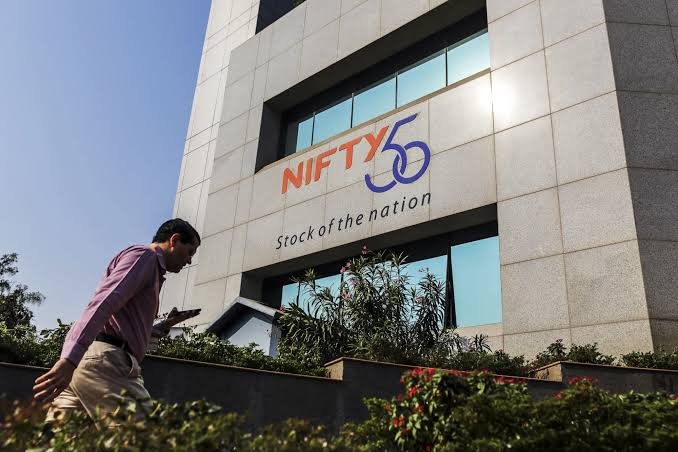
The Indian stock market staged a recovery on Friday, September 25, as benchmark indices bounced back after a sharp sell-off in the previous trading session. Buying interest in banking, automobile and oil-related stocks helped lift market sentiment, although concerns over crude oil prices, foreign fund outflows and global economic conditions continued to remain in focus.
The BSE Sensex gained 315.20 points, or 0.43%, to close at 73,895.74, while the Nifty 50 advanced 77.40 points, or 0.34%, to end at 23,140.50. The recovery came a day after the domestic market witnessed a significant decline, with investors reacting to rising crude prices, higher US Treasury yields and broader global uncertainties.
Friday’s session showed that investors were willing to buy selected stocks after the previous day’s decline. However, the market remained sensitive to developments in international markets and movements in oil prices.
Banking, Auto and Oil Stocks Support Market Recovery
Banking stocks were among the major contributors to Friday’s recovery. Automobile and oil & gas companies also attracted buying interest as investors looked for opportunities following the sharp correction in several stocks.
According to market reports, the rebound was largely supported by value buying. After a steep fall, some investors returned to stocks that had declined during the previous session, helping the benchmark indices recover part of their losses.
Several individual stocks also witnessed strong movements. Axis Bank was among the notable gainers during the session, while companies across the banking and financial sectors helped support the broader market.
The recovery, however, was not uniform across all sectors. Information technology stocks remained under pressure at different points during the session, reflecting the mixed nature of the overall market.
Why Crude Oil Prices Matter for Indian Markets
Crude oil remained one of the biggest factors influencing investor sentiment.
India imports a large portion of its crude oil requirements, making international oil prices particularly important for the country’s economy and financial markets. Higher crude prices can increase the country’s import bill and put pressure on inflation and corporate costs.
On Friday, crude prices moved lower from their recent highs, offering some relief to investors. Brent crude was still trading at elevated levels, however, meaning oil prices remain an important risk factor for the Indian market.
Any further decline in crude prices could provide additional relief to sectors sensitive to fuel and input costs, while another sharp increase could put renewed pressure on equities.
Foreign Investor Selling Remains a Concern
Foreign institutional investor activity was another important factor being closely watched by the market.
Foreign investors sold Indian equities worth ₹5,027.36 crore on September 24, according to data reported by Moneycontrol. During the same session, domestic institutional investors bought shares worth approximately ₹4,301 crore.
The contrasting activity between foreign and domestic investors has become an important feature of recent market movements. While domestic institutional buying has provided some support, continued foreign selling can create additional pressure on benchmark indices.
Investors are therefore likely to monitor upcoming FII and DII flow data to assess whether the recent selling trend continues or begins to moderate.
Market Recovers After Heavy Thursday Losses
Friday’s gains came after a difficult session on Thursday.
The Indian market had witnessed a sharp sell-off, with the Sensex losing more than 1,200 points during the session and the Nifty falling significantly. Rising crude prices, higher US Treasury yields and concerns surrounding global economic and geopolitical developments were among the factors affecting investor sentiment.
The Friday rebound consequently represented a recovery after the previous day’s decline rather than a complete removal of those concerns.
Global market movements are likely to remain important for Indian equities, particularly as investors assess interest-rate expectations, bond yields and commodity prices.
What Investors Will Watch Next
The market’s direction in the coming sessions could depend on several factors.
Crude oil prices will remain closely monitored because of their impact on inflation and India’s import bill. US Treasury yields and global equity markets could also influence foreign investment flows into emerging markets.
Investors will additionally keep an eye on domestic institutional activity and corporate developments as the market moves ahead.
Geopolitical developments could also result in sudden changes in market sentiment, particularly if they have an impact on crude oil supply or global risk appetite.
Indian Stock Market Ends the Week on a Positive Note
The Indian stock market ended Friday’s session higher, with the Sensex gaining more than 315 points and the Nifty moving back above the 23,100 level.
The recovery was supported by buying in banking, automobile and oil-related stocks, while easing crude prices provided some relief after the previous day’s sharp decline. At the same time, continued foreign investor selling, elevated oil prices and global market uncertainty remain important factors for investors.
The latest session highlights the volatility currently visible in Indian equities. While Friday’s gains helped the benchmark indices recover some of their recent losses, market participants will continue to track crude oil, global bond yields, institutional fund flows and international developments to understand the next direction of the market.

